
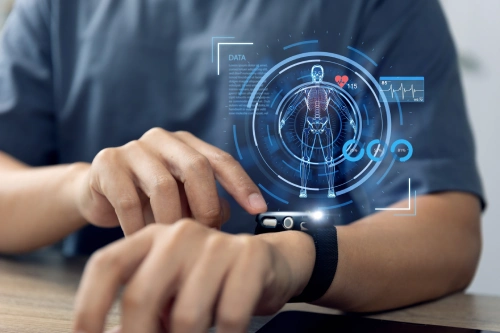
AI/XR wearable products rarely fail because the model was inaccurate in the lab. They fail because reality introduces combinations the system was never validated against1.
A product may perform well during controlled demonstrations, benchmark testing, or isolated model evaluations. But once it enters the real world, the environment changes constantly. Temperature fluctuates. Lighting conditions shift. Network quality varies. Battery states degrade. Users move unpredictably. Accents, noise, gestures, privacy settings, and social context all influence how the experience is perceived.
Cognitive overload, emotional fatigue, and interaction friction can also shape whether users continue engaging with AI/XR systems over time.

In AI/XR systems, these variables are not edge cases. They are the product experience.
As the industry moves toward multimodal, AI-first wearable systems, validation can no longer focus only on model accuracy. Accuracy may prove capability, but coverage proves readiness.
The Industry Is Optimizing the Wrong KPI

Today, most AI/XR programs still measure readiness through traditional metrics:
- Model accuracy
- Benchmark performance
- Functional pass/fail rates
- Latency measurements
- Automation completion percentages
These metrics remain important, but they are no longer sufficient.
A model can be technically accurate and still deliver a poor product experience if the system is not validated against real-world variability.
For example, an AI assistant may perform well in ideal acoustic conditions but fail in environments with overlapping speech, road noise, or regional accents. Gesture interactions may behave differently under motion or varying light conditions. Thermal constraints may degrade responsiveness after extended usage. Privacy or bystander discomfort may reduce product adoption regardless of technical performance.
These are the kinds of failures that damage user trust. The challenge is not simply whether the model was wrong. The more important question is:
“What were the conditions that caused the model to behave the way it did?”
That shift in thinking changes how validation should be approached.
Coverage Is the New Readiness Metric
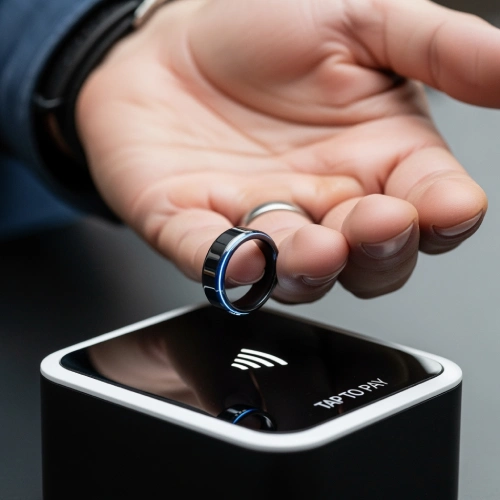
Coverage in AI/XR systems is fundamentally different from coverage in traditional software systems.
Historically, coverage has been associated with:
- Code coverage
- Functional test coverage
- Device interoperability coverage
- PRD or requirement coverage
In AI/XR systems, the problem expands significantly.
Coverage now includes:
- Environmental coverage
- Behavioral coverage
- Interaction coverage
- Multimodal workflow coverage
- Privacy and safety scenario coverage
- Emotional and social-context coverage
- Device state and degradation coverage
- Bystander trust and social acceptability coverage
The complexity comes from combinations.
A product may behave correctly under ideal conditions, but the experience can break when multiple variables interact simultaneously:
- Low battery + high ambient temperature
- Motion + weak connectivity
- Background noise + latency spikes
- Privacy mode + multimodal interaction
- Sensor drift + edge-device processing limitations
These scenarios are difficult to predict through isolated testing.
This is why coverage should increasingly become part of launch readiness criteria and release governance.
As release ownership moves from engineering teams to product managers, business stakeholders, and executive sponsors, coverage transitions from a technical metric into a business risk indicator. According to a recent survey2, over 8 in 10 (83%) of EMEA IT teams (as well 73% in the US) say they delay launches because they aren’t confident in their test coverage.
Because ultimately:
Accuracy proves capability. Coverage proves readiness.
Coverage-driven validation improves:
- Launch predictability
- Confidence in release decisions
- Early identification of unknown-unknown failure modes
- Risk-based launch governance
- Brand protection and user trust
- Measurable release-readiness KPIs
- Risk-indexed release gates
- Coverage-based entry and exit criteria
Coverage should no longer be viewed as a testing metric alone. It should become part of product strategy and launch strategy.
Why AI-in-the-Loop Validation Becomes Necessary
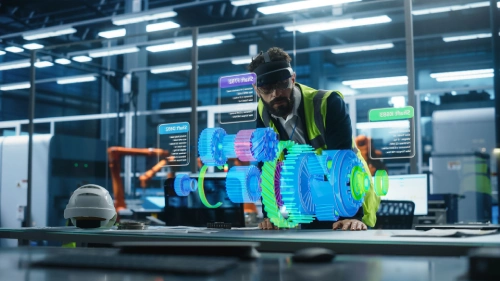
The complexity of multimodal AI/XR systems creates a combinatorial explosion that manual validation and traditional automation approaches struggle to scale3. Users do not experience isolated models. They experience workflows.
Every interaction typically includes multiple stages:
Input → Interpret → Reason → Overlay → Output → Share
Failures rarely happen in isolation. They emerge across transitions.
Latency accumulates between steps. Context may degrade during translation or orchestration. Environmental conditions can impact sensor accuracy. Thermal behavior may affect performance over time. Privacy constraints may interrupt workflows unexpectedly.
These are not single-point failures. They are system-level behavioral failures. Traditional automation frameworks were not designed for this level of dynamic interaction complexity. This is where AI-in-the-loop validation becomes critical.
AI-assisted evaluation systems can help:
- Generate traceability and audit artifacts as part of validation workflows
- Generate scalable scenario combinations
- Prioritize high-risk workflows
- Reduce redundant test execution
- Assist in grading and outcome analysis
- Improve test selection efficiency
- Expand multimodal interaction coverage
This does not eliminate the role of human validation. Instead, it enables engineering teams to focus human expertise where risk is highest and creates validation systems that are increasingly compliance-ready by design.
Over time, synthetic scenarios, interaction grammars, and risk-prioritized validation datasets evolve into reusable organizational assets across products and regions.
The decision to use automation, AI agents, or human oversight should not depend on available tooling alone.
It should depend on:
- Functional risk
- User impact
- Safety implications
- Privacy exposure
- Business consequence
This creates a more intelligent validation strategy. Low-risk, repeatable scenarios can be heavily automated. High-risk or ambiguous workflows may still require human oversight and experiential evaluation.
The objective is not to automate everything. The objective is to scale coverage economically without compromising confidence.
Validating Intelligence Where It Is Experienced

Another important shift in AI/XR systems is that validation must increasingly happen where the experience is consumed.
In many cases, product success depends less on isolated model quality and more on how the system behaves under real device constraints.
That includes:
- Edge-device processing limitations
- Offline operating conditions
- Thermal throttling
- Battery degradation
- Connectivity instability
- Sensor variability
- Context switching across applications and services
A model that performs well in cloud-based evaluation environments may behave very differently on-device. This is why first-time task success under real operating conditions becomes a more meaningful KPI than isolated benchmark accuracy4.
Examples include:
- Successful task completion under offline constraints
- Stable multimodal interaction during motion
- Reliable contextual awareness under environmental variability
- Sustained responsiveness under thermal stress
Validation must increasingly measure experiential outcomes rather than isolated component performance.
Telemetry Changes Validation from Reactive to Strategic
One of the biggest gaps in AI/XR product validation today is the disconnect between field behavior and validation coverage.
Telemetry is often used primarily for debugging user-reported issues after launch. But telemetry can become significantly more valuable when used as a coverage intelligence system.
Instead of only asking “How do we fix reported issues?”, organizations should increasingly ask “How much of what the product actually sees in the field turns into new tests that matter?”
This changes telemetry from operational data into validation strategy.
Telemetry can help:
- Identify emerging usage patterns
- Discover previously unknown scenarios
- Prioritize high-risk workflows
- Generate new validation conditions
- Improve release-readiness dashboards
- Reduce unknown-unknown categories
Over time, telemetry-driven validation creates a flywheel where field behavior continuously improves coverage quality, reduces risk exposure, and strengthens product confidence. This becomes especially important for:
- Post-launch stability
- Reducing RMAs
- Improving user trust
- Supporting SLA commitments
- Enabling scalable service models
Gradually, coverage maturity may increasingly influence SLA confidence, service guarantees, and premium product experiences. Functionality alone is no longer the differentiator. Predictable, reliable behavior under real-world conditions becomes the differentiator.
Coverage as a Business Lever

The implications of coverage-driven validation extend far beyond engineering.
Coverage influences:
- Launch confidence
- Brand exposure risk
- User retention
- Product reviews and adoption
- Operational support costs
- Certification readiness
- SLA credibility
- Commercial scalability
This is especially important in AI/XR systems where the experience itself becomes the product. A poor interaction is not just a technical issue. It becomes a brand issue. This is why release decisions should increasingly be tied to measurable coverage thresholds and risk-indexed KPIs.
Organizations that operationalize coverage effectively will be better positioned to:
- Ship earlier with confidence
- Reduce NPI/NTI delays
- Minimize unknown-unknown failures
- Lower validation friction
- Improve launch predictability
- Scale globally with lower operational risk
Without AI-in-the-loop approaches, coverage can become either slow or prohibitively expensive. With scalable, risk-driven validation strategies, coverage becomes a competitive advantage.
The Shift from Accuracy to Readiness
AI/XR wearable systems are forcing the industry to rethink validation fundamentally. The future of product success will not depend only on:
- Smarter models
- Better benchmarks
- Higher automation volumes
It will depend on how effectively organizations understand real-world behavior at scale. The companies that succeed will not simply validate whether the product works. They will validate whether the product continues to work across environments, workflows, users, constraints, and unpredictable real-world conditions.
In AI/XR systems, coverage is no longer only a validation metric. It increasingly becomes part of launch strategy, product trust, and long-term brand experience. That requires a shift from accuracy-centric thinking to readiness-centric thinking, because in AI/XR systems:
Accuracy proves capability and coverage proves readiness.
1 https://www.itpro.com/hardware/is-there-a-future-for-xr-devices-in-business
4 https://arxiv.org/abs/2408.10000
Download this article as PDF








Tinku Malayil Jose
Tinku Malayil Jose is the Head of Vertical Technology (Hi-Tech) at Quest Global. As a seasoned professional in Technology & Strategy, he specializes in end-to-end system and service deployments. With a focus on driving R&D, IP, and solutions from silicon to system to software to cloud, Tinku is dedicated to productizing offerings at Quest Global. In today's era of democratized technology and innovation, Tinku is driven by a passion for creating the right products and solutions for end consumers. His greatest inspiration comes from the interplay between people and technology in driving business impact. Tinku thrives at the intersection of Product Engineering – Technology, Business, and People. He believes that the most significant quality of a product leader is the ability to empathize with others. Tinku enjoys serving as an intermediary between technology, user, operational, and business considerations, and driving partnerships to realize customer and business needs. With over twenty years of experience in the Electronics and IT industry, including 15+ years in “Business-Techno” leadership roles, Tinku has evolved into a leader who understands and can lead the entire product and system engineering lifecycle. He has led product teams that have consistently delivered high-quality products such as Smart TVs, STBs, Media Players, Automotive IVI, Digital Cockpits, ADAS, IoT Gateways, and Industrial Gateways for the Consumer Electronics, IoT/IIoT, Automotive, and Consumer Goods industries.
FAQs
In AI/XR wearables, real-world variability plays a significant role because environmental factors such as temperature changes, lighting conditions, and network quality can drastically affect the system’s performance. These variables, rather than being edge cases, are integral to the product experience. Hence, validation must extend beyond model accuracy to include these dynamically changing conditions to ensure the system’s readiness in practical, everyday scenarios. This understanding shifts the focus from merely testing for accuracy to proving system readiness against multi-variable interactions that are typical in real-world settings.
AI-in-the-loop validation enhances the validation process by addressing the combinatorial explosion of interactions and environmental factors involved in AI/XR systems. Traditional automation frameworks cannot scale to cover this complexity effectively. AI-in-the-loop systems aid in creating traceability, prioritizing high-risk workflows, and enhancing scenario coverage, which frees human validators to focus on areas of higher risk. This method facilitates a more adaptable validation strategy, using AI to manage repeatable, low-risk tasks while human expertise tackles more complex, high-risk validation scenarios.
Integrating coverage into product strategy involves making it a key factor in launch confidence and risk assessment. With AI/XR systems where the experience defines the product, a failure in performance affects the brand itself. Organizations must operationalize coverage to manage brand exposure, ensure regulatory compliance, and optimize user retention strategies. By tying launch decisions to measurable coverage thresholds and risk-adjusted KPIs, companies can reduce the chance of unpredictable failures and enhance global scalability.
Coverage has become the new benchmark for readiness in AI/XR systems, as it encompasses the vast array of conditions under which the product must perform reliably. Unlike traditional metrics that focus mainly on accuracy, coverage metrics include environmental, behavioral, and interaction scenarios that AI/XR systems encounter in real life. This shift allows stakeholders to assess a product’s preparedness to handle real-world complexities, supporting better launch decisions and reducing risk. Coverage-driven validation helps improve launch predictability, user trust, and overall brand protection.
Telemetry transforms validation from a reactive to a strategic approach by leveraging real-world usage data. Rather than solely responding to reported issues, telemetry enables organizations to proactively discover new scenarios and adjust validation frameworks accordingly. This strategic use of telemetry data improves coverage quality by identifying high-risk workflows and generating new validation conditions, ensuring post-launch stability and enhancing user trust. It also plays a crucial role in maintaining SLA commitments and supporting scalable service models.